
Hackathon · AUHack · April 2016
FlappyNerd: Flappy Bird with real jumps
FlappyNerd is Flappy Bird where, instead of tapping the screen, you have to jump yourself. We built it over a weekend at AUHack 2016, where I made the graphics and did part of the programming. We won the AWS prize.
The idea
In Flappy Bird you keep a bird in the air by tapping the screen. In FlappyNerd it is you who has to get into the air. The game measures how long you are up and turns it into a competition: which of your friends is the best flyer?
There were five of us building it over a weekend at AUHack 2016: Christian Nielsen, Tomas Nemecek, Christian Villadsen, Thomas Oether Rasmussen and me.
How it works
The game is an Android app. You enter your name and a game pin, so you join the same game as your friends, and press the “FLY!” button. After that the screen only shows your name and pin, and you jump.
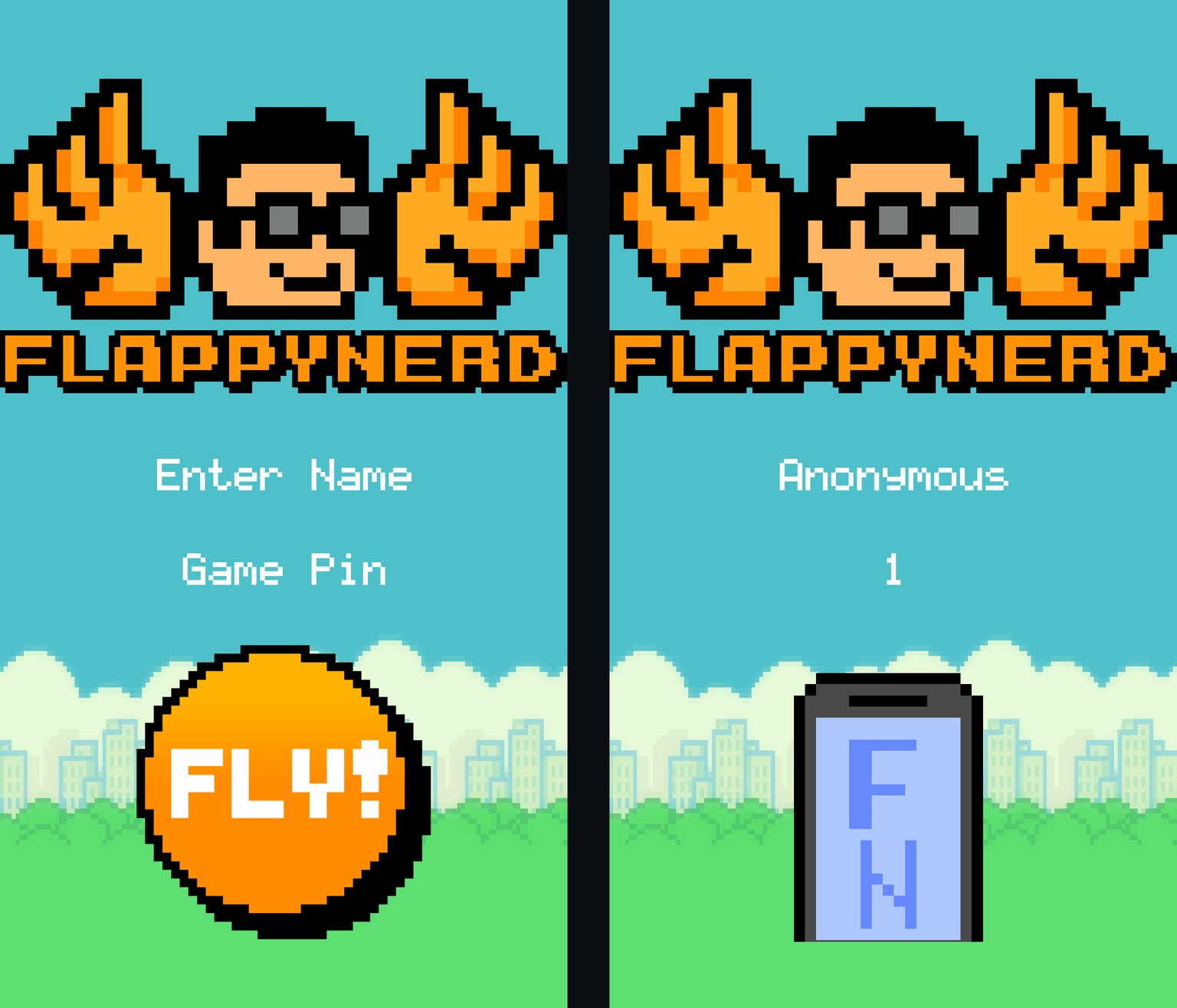
The jump is detected with the phone’s accelerometer. The app listens for a pattern on the vertical axis: first a strong swing upwards, then a drop where the phone is in the air, and finally the landing. The time between take-off and landing is the flight time. It is sent to a server over HTTP together with the player’s name and pin, so the server can compare the players.
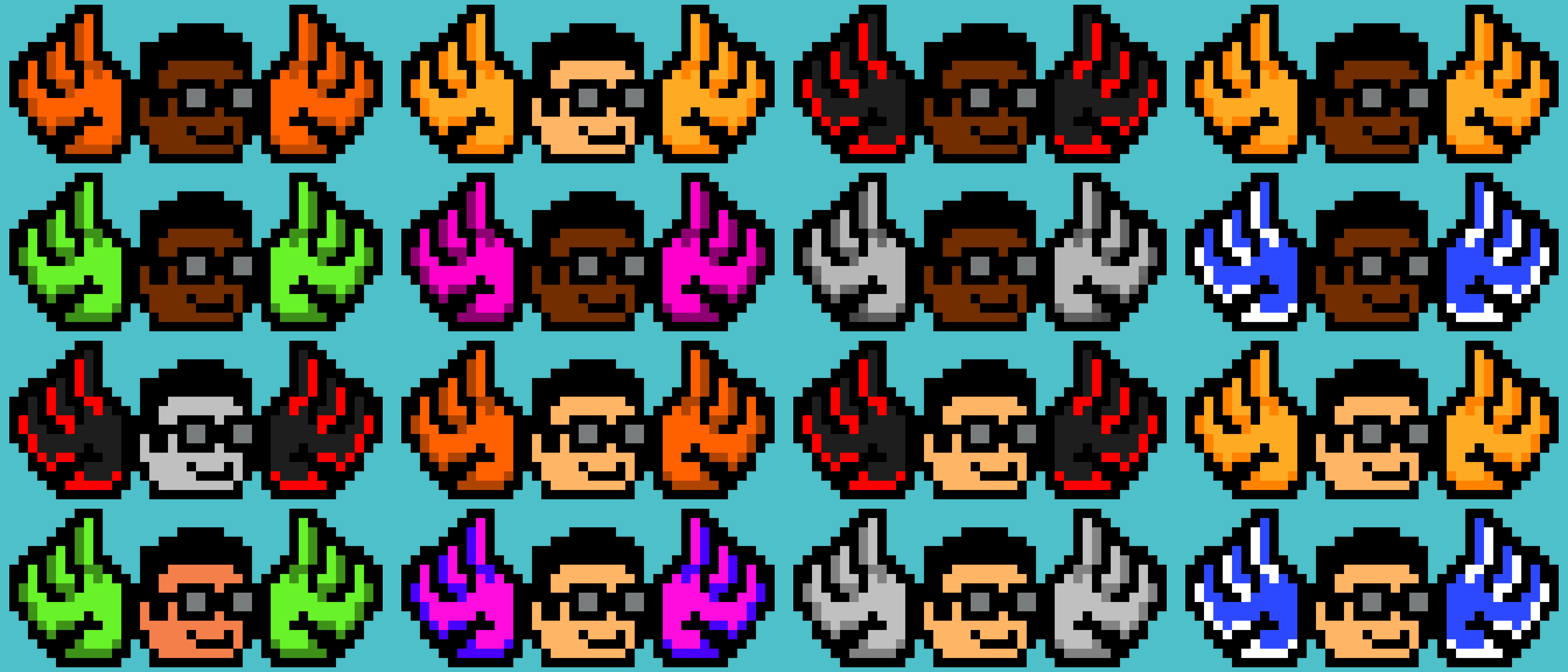
You also choose your character. Tapping the logo draws a new random nerd from 16 pixel characters, and the choice is sent to the server.
The server and the big screen
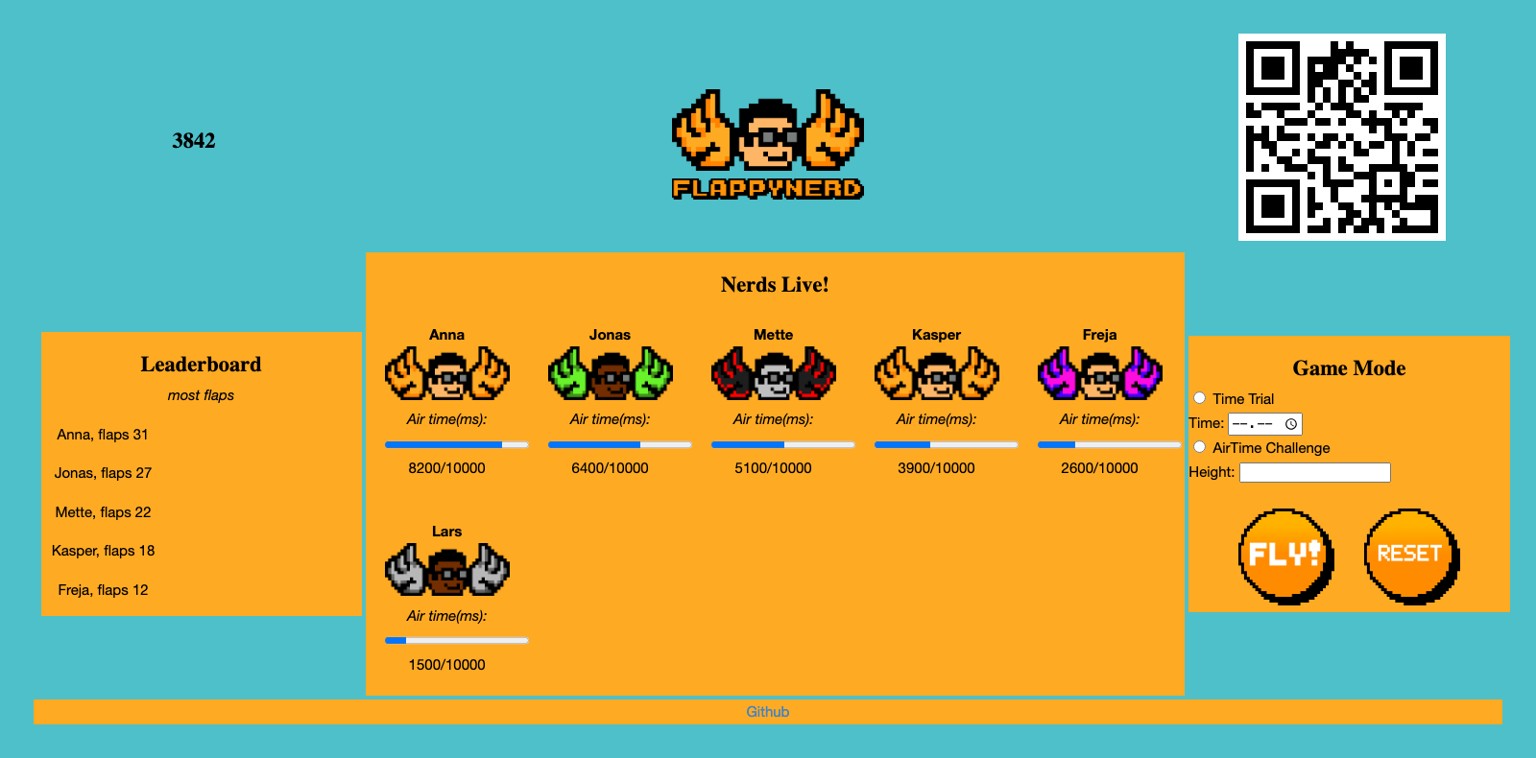
Behind the app is a server that one of us wrote in Node.js with Express and a Postgres database. In front of it is a web page that can be shown on a big screen in the room. It shows a game pin and a QR code for joining, a leaderboard by most jumps, and “Nerds Live!”, where each player has their character and a bar that fills up with their total air time towards a goal of 10 seconds. The page fetches new numbers several times a second, so you can watch the bars grow while people jump. There are also two game modes: time trial and an AirTime challenge.
My contribution
I made the graphics and did part of the programming. We pair programmed on a single computer. The graphics are pixel art in the same style as the original game: the background with clouds and a city, the logo, the 16 characters and the buttons.
Challenges
The accelerometer gave us trouble, and Android turned out to be a messy platform to develop for. We also learned that it is a good idea to turn on wifi when you are debugging the connection.
The result
We won the AWS prize at AUHack 2016. What we were proudest of was the design and the finish.
We learned Dart, how messy Android can be, and a good deal about UX. The next step we had in mind was to connect smartwatches, so you can be sure it is a real jump.